
A Lesson in Sustainability: Centering Doulas, Elevating Birth Equity
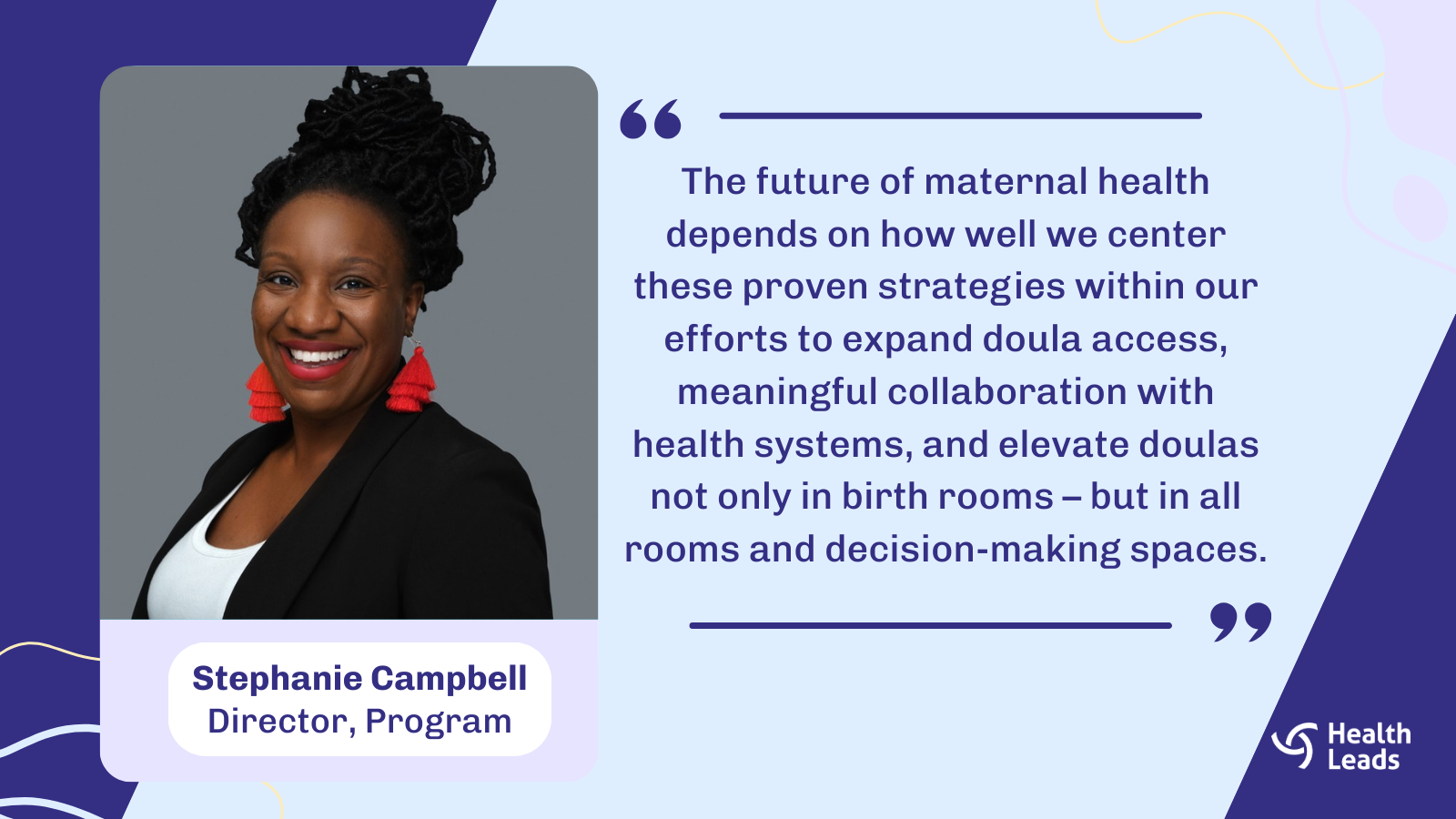
By Stephanie Campbell, Program Director
As a Black birthing person and public health advocate, I entered my own birth experience aware of the inequities shaping outcomes for people who look like me. Choosing to work with a doula was one of the most important decisions I made. My doula was a fierce advocate, a calming force, and a cultural translator who ensured my voice was heard when it mattered most. Her presence reminded me that community-rooted care is essential — not optional in our health care system.
Over the past year, I had the honor of curating and hosting a national maternal health webinar series that examined strategies and policies that would help us have a future where every person has access to the culturally rooted maternal health support they deserve. Each session uplifted hyperlocal, community-led solutions and centered doula leadership, examining how to strengthen, sustain, and expand this crucial, community-rooted workforce. From hospital-based collaborations to grassroots organizing, we saw how communities are building bridges across care settings with creativity, care, and urgency. The biggest takeaways from this series:
- Doulas know what they need and how best to advance birth justice. Doulas have a unique perspective and proximity to birthing families. Their role allows them to understand what birthing families need to thrive and provide social emotional support throughout the perinatal period and beyond. Listening to, partnering with, and investing in their leadership is essential to true systems change. As Stephanie Kennedy of the Louisiana Public Health Institute reminded us, “Everyone’s time and expertise is valuable.”
- Collaboration grounded in trust strengthens care delivery and deepens understanding between doulas and clinicians. When clinicians understand the unique, holistic role doulas play in birth and beyond, that creates space for a truly synergistic partnership that supports the best possible outcomes for birthing people and families. Nicole JeanBaptiste of Bx (Re)Birth and Progress Collective offered, “In order to maintain these partnerships, we have to meet people where they are and embrace our humanity. We are doulas, we have a more holistic approach.”
- Caring for the mind, body, and soul of doulas is community care. A thriving, sustainable doula workforce requires equitable pay, mental wellness support, and pathways to leadership. As Brandie Bishop of the National Black Doulas Association shared, “Money allows us to live the life we need to live to fully show up for the families we support.”
- Hyperlocal innovation matters. Across states, doulas and birthworkers are designing creative, inclusive, community-driven models that deserve to be shared and spread. “Rural areas must partner together to cross-train folks and fill gaps. You can’t do it alone,” reflected Breanna Grant of Every Baby Guilford.
- Policy is the catalyst, but imagination is the strategy. Sustained momentum will come from combining visionary thinking with aligned investment and policy reform rooted in justice. Amy Chen of the National Health Law Program reminded us, “We must continue to advocate for doula access, it will be even more needed in today’s environment. We cannot lose momentum.
The future of maternal health depends on how well we center these proven strategies within our efforts to expand doula access, integrate and collaborate with doulas into health systems, and elevate doulas not only in birth rooms, but in all rooms and decision-making spaces.
Reach out to Tigee Hill, Executive Director – East, to learn more about our work across New York, Massachusetts, and nationally to advance doula access and support healthier outcomes for parents and families.